
Security Planning for Commercial Properties With Multiple Tenants and Independent Entrances
Introduction
Commercial properties often accommodate several businesses within the same building or complex. These may include retail outlets, professional offices, clinics, service providers, restaurants, and other establishments operating under different schedules. Although this arrangement makes efficient use of commercial space, it can create additional security challenges, particularly when each tenant has an independent entrance.
Unlike a single-occupant property, a multi-tenant building may have several doors, separate operating hours, shared parking facilities, delivery areas, and common corridors. Consequently, security teams must understand how these spaces connect and which individuals are authorised to access each area.
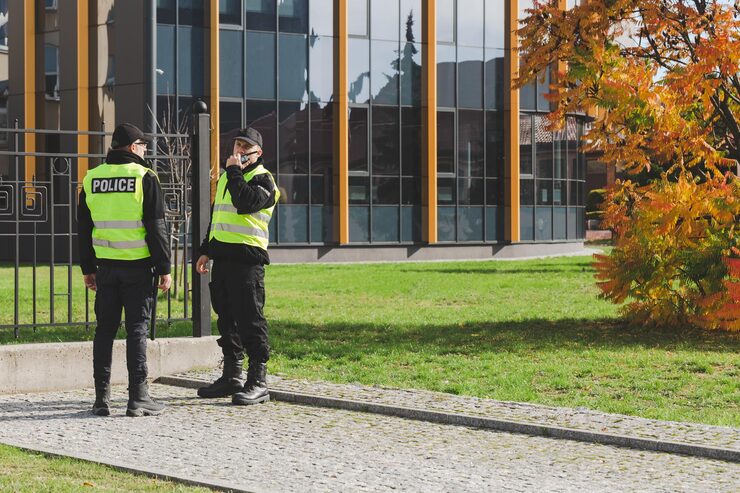
Effective security planning helps property managers protect tenants, visitors, shared facilities, and business assets without unnecessarily restricting legitimate activity. Professional commercial security services can support this process through access monitoring, patrols, visitor management, incident reporting, and coordination with tenants.
Why Multi-Tenant Commercial Properties Need a Structured Security Plan
When several businesses operate within one property, security responsibilities can become complicated. For example, one tenant may open early in the morning, while another operates late into the evening. Similarly, a restaurant may receive deliveries through a side entrance, while an office tenant uses a separate entrance for employees and visitors.
Without clear procedures, these different activities can create gaps in access control.
Common security challenges include:
- Multiple entrances that require different access arrangements.
- Tenants operating at different hours.
- Shared parking areas and loading facilities.
- Visitors entering through the wrong entrance.
- Unclear responsibility for common areas.
- Contractors requiring access to different tenant spaces.
- Emergency exits being confused with regular entry points.
Moreover, an incident affecting one tenant may have implications for the wider property. Therefore, security planning should consider the building as a connected environment while respecting each tenant’s specific access requirements.
Mapping Entrances and Defining Access Zones
The first step is to understand the property’s layout. Property managers should identify every entrance, exit, service door, parking access point, loading area, and shared corridor.
Next, they should determine which areas are public, which are shared, and which are restricted to specific tenants or authorised personnel.
For instance, the main lobby may be accessible to visitors during business hours, whereas an entrance leading directly to private offices may require additional verification. Similarly, a service entrance may be reserved for deliveries and maintenance work.
Security personnel need clear instructions about these distinctions. Otherwise, they may be unable to determine whether someone is using an appropriate entrance or attempting to access a restricted section.
Furthermore, the property’s access arrangements should be reviewed whenever a tenant moves in, moves out, or changes its operating hours.
Managing Independent Tenant Entrances
Independent entrances can improve convenience by allowing each business to manage its own customers and employees. However, they also increase the number of locations that may require monitoring.
For this reason, property managers should establish clear procedures for each entrance based on its purpose, operating hours, and associated risks.
Security guards can monitor designated entry points, observe unusual activity, and report doors that are left unsecured. Where an entrance is intended for authorised staff only, appropriate access checks should be followed.
In addition, entrances that are no longer required outside business hours should be secured according to the property’s procedures. However, emergency exits must remain compliant with applicable fire safety requirements.
A practical entrance plan should specify:
- The tenant or group authorised to use each entrance.
- The hours during which access is permitted.
- Whether visitors require registration or approval.
- Who is responsible for reporting access problems.
- How security personnel should respond to unauthorised entry attempts.
As a result, independent entrances can remain convenient without creating unnecessary uncertainty about access permissions.
Coordinating Security With Different Tenants
Each tenant may have its own employees, customers, suppliers, and internal security procedures. Nevertheless, certain responsibilities, such as monitoring shared entrances and protecting common areas, may fall under the property manager’s authority.
Therefore, communication between property management, security personnel, and tenant representatives is essential.
At the beginning of an occupancy agreement, tenants should receive relevant information about building access, delivery arrangements, visitor procedures, emergency exits, and security reporting.
Moreover, property management should maintain updated contact details for each tenant’s designated representative. This allows the security team to verify unusual requests and communicate important incidents promptly.
For example, if a person requests access to a closed office through another tenant’s entrance, guards should know whom to contact before making an access decision.
Regular coordination also helps security personnel understand special operating requirements, such as extended business hours or scheduled maintenance.
Managing Shared Lobbies and Corridors
Shared spaces can become busy when several tenants operate simultaneously. Employees, customers, delivery personnel, and visitors may all use the same lobby, corridor, staircase, or lift area.
Consequently, these spaces require clear monitoring and reporting procedures.
Security guards can help direct visitors, observe unusual behaviour, and report obstructions that affect movement. They may also assist with managing queues during busy periods or guiding people towards the correct tenant entrance.
Furthermore, property managers should ensure that common areas are not treated as unrestricted access routes to private offices.
For instance, a visitor who enters a shared lobby to attend an appointment should not automatically be allowed to proceed into another tenant’s workspace. Instead, the visitor should follow the relevant registration or reception procedure.
Clear signage can also reduce confusion by identifying tenant entrances, visitor reception points, and restricted areas.
Controlling Deliveries and Service Access
Multi-tenant commercial properties frequently receive deliveries for different businesses. These may include office supplies, food products, retail stock, maintenance materials, and equipment.
If drivers are unfamiliar with the building, they may approach the wrong entrance or attempt to leave goods in shared areas. Moreover, several deliveries arriving simultaneously can create congestion near service doors.
To manage these challenges, property managers should establish designated delivery locations and communicate the arrangements to tenants.
Security personnel can verify the intended recipient, direct drivers to the appropriate area, and follow established procedures for recording deliveries where required.
In addition, contractors and maintenance workers should be directed only to authorised work areas. If a person requests access to a tenant’s private premises, the relevant tenant or authorised representative should confirm permission.
These measures improve accountability while reducing disruption to other businesses operating within the property.
Managing Parking and Vehicle Access
Shared parking facilities can create security concerns when spaces are used by employees, customers, visitors, contractors, and delivery vehicles from different businesses.
For example, an unauthorised vehicle may enter through a tenant’s independent entrance or remain in a restricted parking area. Similarly, confusion about designated parking can lead to disputes between tenants and visitors.
Therefore, property managers should establish clear parking rules and communicate them to tenants and security staff.
Depending on the property’s needs, security personnel may monitor vehicle entry, direct visitors towards designated spaces, report abandoned vehicles, and help manage congestion.
Furthermore, pedestrian routes between parking areas and tenant entrances should remain clear. If construction, maintenance, or temporary closures change these routes, the security team should receive updated instructions.
Security guards should report suspicious activity or access concerns through the designated procedure rather than making assumptions about a vehicle or its occupants.
Handling Different Operating Hours
One of the main challenges in multi-tenant properties is that businesses rarely share identical schedules. Some tenants may open early, others may operate late, and certain businesses may close for several days each week.
Consequently, a single opening and closing routine may not suit the entire building.
Property management should maintain an updated schedule of tenant operating hours and communicate any approved exceptions to the security team.
For example, if a business is authorised to receive a late delivery, guards should be able to verify that arrangement. Conversely, if an entrance is normally closed at that time, the team should not allow access without appropriate confirmation.
Additionally, security patrols may need to focus on common areas that become quiet after most tenants close.
Regularly updated schedules help guards distinguish expected activity from unusual access requests.
Establishing Clear Responsibility for Common Areas
Disagreements can arise when tenants are uncertain about who is responsible for security in shared spaces. One business may assume that the property manager monitors a service corridor, while the manager may expect the tenant to secure the door.
Therefore, responsibilities should be defined clearly.
Property management should identify who is responsible for shared entrances, parking areas, common corridors, external lighting, and building-wide access systems. Tenants, in turn, should understand their responsibilities for private offices, internal storage areas, and their own authorised visitors.
Security personnel should receive instructions that reflect these arrangements.
Moreover, when a security issue occurs, there should be a clear reporting route. This prevents incidents from being overlooked because each party assumes someone else will respond.
Responding to Security Incidents
An incident in a multi-tenant property can affect several businesses. For instance, a damaged entrance may expose a shared corridor, while a suspicious individual may attempt to enter multiple tenant spaces.
Security personnel should follow established procedures to report the incident, protect affected areas where safe and appropriate, and notify the responsible manager.
Additionally, information should be shared with affected tenants when necessary, while respecting privacy and confidentiality requirements.
If an incident involves an immediate threat, the response should follow the property’s emergency procedures and involve the appropriate authorities.
Afterward, management can review the incident to determine whether changes to access rules, staffing, signage, or monitoring are required.
Reviewing and Improving the Security Plan
A commercial property’s security needs may change as tenants move in or out, business hours shift, or new entrances become operational. Therefore, security planning should be reviewed regularly.
Property managers can assess incident records, access complaints, delivery problems, and tenant feedback to identify areas that require improvement.
For example, repeated confusion at a side entrance may indicate that signage is inadequate or that access instructions need clarification. Similarly, recurring problems in a shared parking area may require revised monitoring arrangements.
Regular reviews help ensure that security measures remain practical and relevant.
Conclusion
Commercial properties with multiple tenants and independent entrances require coordinated security arrangements that account for different operating hours, visitor requirements, delivery schedules, and restricted areas. Without clear procedures, these features can create uncertainty about who is authorised to enter each part of the property.
Professional security services can help monitor entrances, manage shared spaces, support visitor and delivery procedures, and report access-related concerns. Furthermore, effective communication between property management, tenants, and security personnel helps establish clear responsibilities across the building.
Om Sai Safeguard Services supports commercial properties through professional security services focused on access management, premises monitoring, and orderly daily operations. With suitable security planning and clearly defined procedures, property managers can better protect tenants, visitors, and shared facilities while allowing businesses to operate smoothly.