
How Commercial Security Services Support Security for Shared Office Buildings
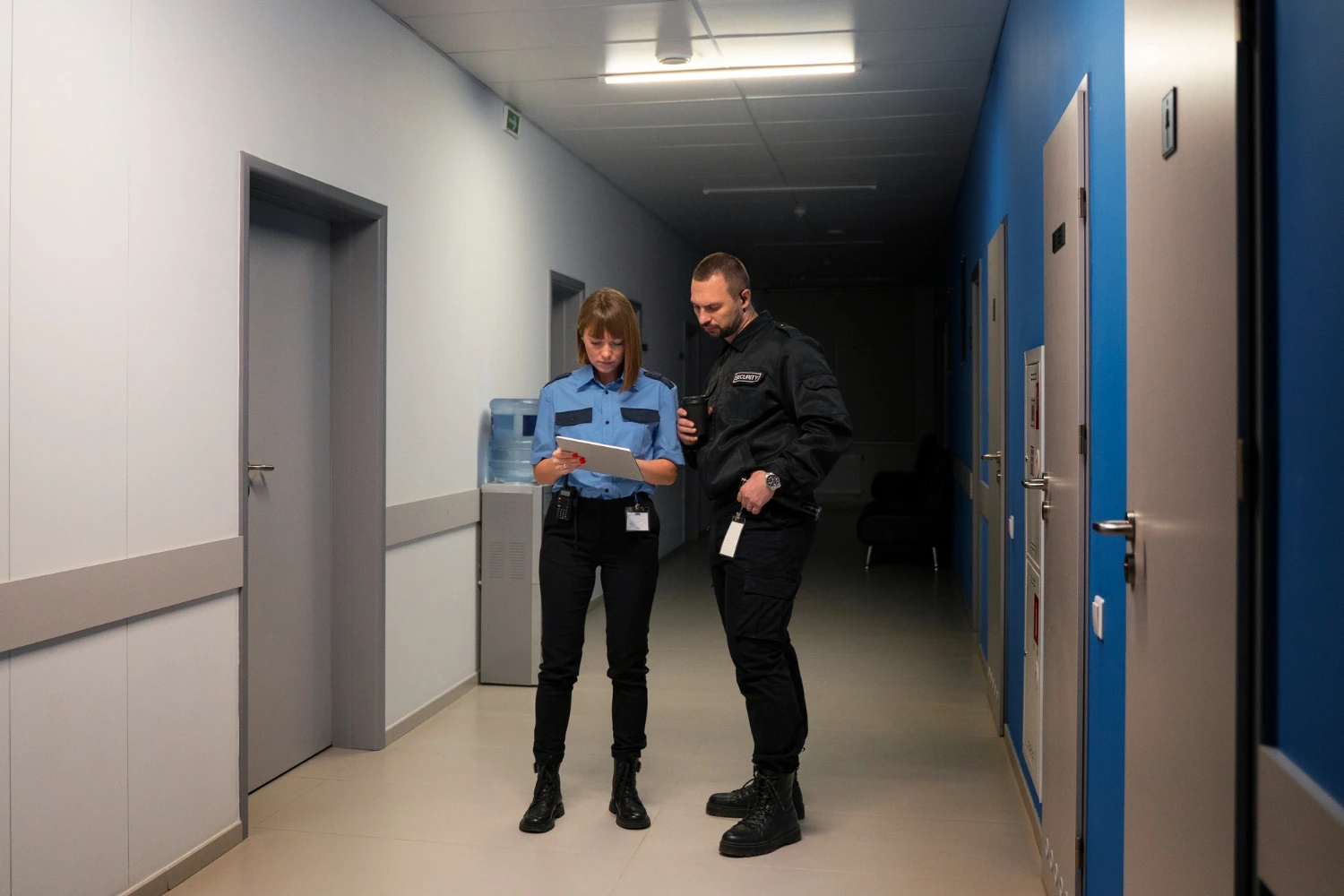
Shared office buildings bring together multiple businesses under one roof. Different companies may occupy separate floors or suites while sharing entrances, reception areas, lifts, parking facilities, corridors, meeting spaces, and service areas. Because of this arrangement, maintaining security requires coordination that goes beyond protecting a single company’s office.
Commercial security services can help shared office buildings manage these challenges by monitoring common entrances, observing visitor movement, supporting access procedures, managing deliveries, monitoring parking areas, and communicating with building management.
Moreover, shared buildings often operate according to different schedules. One company may work regular daytime hours, another may operate late into the evening, while maintenance and cleaning personnel may arrive outside both schedules. Therefore, security arrangements need to account for changing patterns of movement.
The Security Challenge in Shared Office Buildings
A single office generally has a relatively straightforward access structure. Employees, visitors, and service providers enter through designated points, while internal areas belong to one organisation.
A shared office building is different.
Several independent businesses may have their own employees, visitors, contractors, and schedules. Consequently, the building’s security team needs to understand the difference between common areas and company-specific spaces.
This makes consistent procedures particularly important.
Security personnel can support building management by monitoring shared areas while following the access requirements established for different tenants.
Monitoring the Main Building Entrance
The main entrance is usually the first point of contact for employees and visitors.
Security personnel can monitor people entering the building, provide basic directions, and follow visitor-management procedures.
For example, a visitor may be arriving for a meeting with a company on the seventh floor. Rather than allowing unrestricted movement, security personnel can follow the building’s established process for confirming the visitor’s destination.
At the same time, employees should be able to enter efficiently without unnecessary delays.
Therefore, security at a shared entrance needs to balance access, convenience, and awareness.
Managing Visitors for Multiple Companies
One of the biggest challenges in a shared building is that visitors may be coming for many different organisations.
A visitor could be meeting a client, attending an interview, delivering documents, joining a business meeting, or visiting a service provider.
As a result, the security desk may need to handle several different visitor procedures.
A structured system can help by recording relevant visitor information and directing people to the appropriate company or floor.
Furthermore, security personnel can communicate with tenant representatives when verification is required.
This reduces confusion and makes visitor movement easier to manage.
Supporting Employee Access
Employees from different organisations may use the same building entrance and lifts. Some may also work outside normal business hours.
Therefore, security personnel can support access procedures according to the building’s policies.
For instance, employees may use access cards or other identification systems. Security personnel can monitor unusual access attempts and communicate system-related problems to building management.
Importantly, the security team should not assume that every person entering the building has access to every floor.
Instead, movement should follow the established access structure.
Managing Shared Lift Areas
Lifts are common-use facilities in many office buildings. During morning arrival times and evening departure periods, they can become crowded.
Security personnel can observe the surrounding lobby and help maintain orderly movement when necessary.
Additionally, they may support visitors who need directions to specific floors.
In larger buildings, security personnel may also need to understand which areas have restricted access.
This is particularly useful when visitors or contractors are unfamiliar with the building layout.
Monitoring Common Corridors and Shared Spaces
Although individual office suites may belong to separate businesses, corridors, staircases, lobbies, and other common areas are shared.
Security personnel can conduct scheduled patrols across these spaces.
During patrols, they may observe:
- Unusual activity
- Unauthorised movement
- Open restricted doors
- Damaged property
- Suspicious objects
- Maintenance concerns
- Lighting or access issues
Because these areas are shared, consistent monitoring can benefit every tenant.
Managing Delivery Personnel
Shared office buildings may receive deliveries for multiple businesses throughout the day. Couriers, food delivery workers, suppliers, equipment installers, and other service providers may enter the property.
Consequently, security personnel need to manage delivery movement without creating unnecessary disruption.
Depending on building procedures, deliveries may be directed to a designated area or reception point.
Security personnel can also ensure that service providers do not move into restricted areas without appropriate authorisation.
This is especially important in buildings where multiple companies handle confidential documents, valuable equipment, or sensitive business information.
Supporting After-Hours Security
Shared buildings often remain active beyond standard office hours. Some companies may have employees working late, while cleaning staff, maintenance workers, and security personnel continue operating.
As a result, security procedures should adapt after normal business hours.
Security personnel may monitor access more closely during quieter periods while still allowing authorised employees to enter.
Furthermore, regular patrols can help identify unusual activity on floors where few people are present.
Managing Empty Floors
Some office buildings have vacant floors or partially occupied areas. These spaces may contain equipment, unfinished interiors, stored materials, or building systems.
Therefore, security personnel can include vacant areas in scheduled patrols.
They can report open doors, damaged locks, unusual activity, or maintenance issues.
This is useful because low-traffic areas can sometimes receive less attention simply because fewer people pass through them.
Parking and Vehicle Movement
Shared office buildings often have parking facilities used by employees, visitors, vendors, and management.
During peak hours, vehicle movement can become busy.
Security personnel can monitor entry and exit points, observe unusual vehicle activity, and help maintain orderly movement around designated areas.
Moreover, visitor vehicles may need to be directed to appropriate parking spaces.
At the same time, security staff can keep emergency access routes clear according to the building’s procedures.
Supporting Tenant-Specific Security Requirements
Although the building is shared, different companies may have different security requirements.
For example, a technology company may have restricted equipment rooms, while a financial organisation may have sensitive records or controlled areas.
Therefore, security personnel may need to understand tenant-specific instructions while maintaining consistent building-wide procedures.
This requires communication between building management, security supervisors, and tenant representatives.
As a result, security can be adapted without creating completely separate systems for every company.
Managing Contractors and Maintenance Workers
Maintenance work is common in office buildings. Electricians, plumbers, air-conditioning technicians, elevator technicians, cleaning teams, and other contractors may need temporary access.
Because these workers may not be regular occupants, their movement should be managed appropriately.
Security personnel can verify relevant information according to building procedures and direct contractors to the appropriate location.
Furthermore, if work affects a shared area, security personnel can help communicate access restrictions to employees and visitors.
Monitoring Emergency Exits
Emergency exits and staircases are critical parts of a shared office building.
Security personnel can monitor these areas as part of routine building security and report obstructions or access issues.
During an emergency, these routes may become particularly important.
Security staff can support evacuation procedures, maintain clear access for emergency responders, and help manage movement according to the building’s emergency plan.
Supporting Fire and Emergency Response
Shared buildings can face emergencies that affect multiple tenants simultaneously.
A fire alarm, medical incident, power failure, water leak, or other disruption may require coordination across several companies.
Security personnel can act as an important communication link between building management, tenants, and emergency responders.
For example, they can help direct emergency teams to the affected area while keeping other entrances and routes organised.
However, emergency procedures should always be established in advance, and security personnel should follow their training and the instructions of emergency services.
Monitoring CCTV and Access-Control Systems
Many shared office buildings use CCTV cameras, electronic access systems, alarms, intercoms, and other technology.
Security personnel can work alongside these systems.
For instance, CCTV may show movement in a common area, while security staff can verify the situation physically.
Similarly, an access-control alert may require a guard to check whether a person is authorised to enter.
Technology therefore provides additional information, while trained security personnel provide physical presence and communication.
Managing Events and Large Meetings
Shared office buildings may host conferences, seminars, recruitment drives, corporate meetings, or tenant events.
These activities can temporarily increase visitor numbers.
Consequently, security teams may need to adjust monitoring around entrances, reception areas, lifts, parking zones, and meeting floors.
Visitors can also be directed toward the correct event area to prevent unnecessary movement through unrelated office spaces.
Maintaining Professional Communication
Security personnel in shared office buildings interact with employees, visitors, contractors, and tenant representatives every day.
Therefore, professional communication is important.
A security guard may need to explain an access procedure, provide directions, respond to a visitor concern, or communicate a temporary restriction.
A calm and respectful approach helps maintain cooperation.
Furthermore, security personnel should apply established procedures consistently rather than treating different visitors differently without a valid operational reason.
Reporting and Shift Handover
Because office buildings may require security coverage throughout the day, shift handovers are essential.
Incoming personnel should be aware of recent incidents, expected visitors, maintenance work, access restrictions, tenant events, and other relevant information.
Likewise, security reports can help building management identify recurring issues.
For example, repeated unauthorised access attempts or recurring problems around a particular entrance may require further review.
Conclusion
Shared office buildings require security arrangements that account for multiple businesses, different working hours, common facilities, visitors, contractors, deliveries, parking, and tenant-specific requirements. Commercial security services can help building management maintain a structured approach while allowing different organisations to operate independently within the same property.
Moreover, effective security depends on communication and consistency. When security personnel understand building procedures and tenant requirements, they can monitor shared spaces without unnecessarily disrupting normal business activity.
Om Sai Safeguard Services provides commercial security solutions alongside industrial, residential, bank, hotel, mall, and other security services. Its existing service coverage includes commercial complexes and large organisations across Maharashtra. With trained security personnel and organised security operations, Om Sai Safeguard can support shared office buildings in maintaining a controlled and professional environment for tenants, employees, visitors, and service providers.